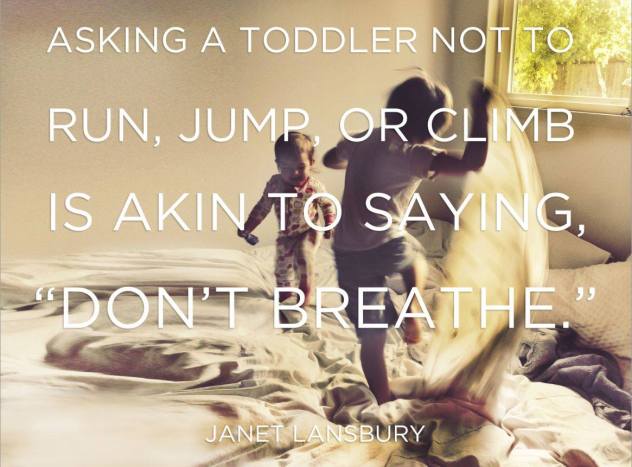
asking a toddler not to run, jump or climb …
Post by Janet Lansbury – Elevating Child Care.
click to watch

… As a six-year-old she developed cancer and had to have her leg amputated just two years after her mum died of the same disease.
Iona … was diagnosed with osteosarcoma – a type of bone cancer – in 2008.
Her right leg was amputated below the knee as a result.
The youngster, from Jordanhill, Glasgow, loves showing off her moves to other children and their parents who are in a similar situation and contemplating what life will be like after an amputation. …
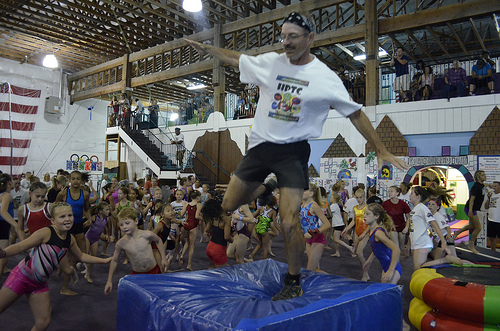
… “Everyone trains at the same time and kids with disabilities are treated like everyone else.
“Iona does floor, vault, beam and bars and this new blade is ideal for her. …
“My prosthetic leg can feel quite heavy when I’m doing sport and this blade is brilliant,” she said.
“It’s been specially designed for me to have extra support at the heel, which helps me balance when I’m on the beam. It definitely helps me be better at gymnastics.”
🙂
(via GymCastic)
You could SPOT a beginner on backward handspring. 😦
Far better is to set-up dozens of progressions without spot. Let the child move step-by-step at their own speed. Have success at each. Dozens of successes.
Let them take ownership of the skill. 🙂
Carrie Lennox:
In last month’s Tumbl Trak newsletter Doug Davis wrote about how progressions build confidence and reduce fear. Just thinking about an athlete “balking” in a round off-back handspring, or other tumbling series is enough to make me shudder.
“Connecting the Dots” is a way to describe all the steps involved in the physical preparation of an athlete and offering an athlete frequent opportunities to feel confident in every step in the process. In a recent video session filming skill progressions, we worked with a young athlete who has good basic training combined with good genes from her parents. The video session focused on cartwheel, handstand, and back handspring progressions from jumping to limbers to fly-backs to work in the pit, (which she had done in many workouts previously).
After filming more than 30 different progressions that lead to a back handspring, our session ended in the pit where we saw in her a confidence and will to move on to her very first back handsprings!! Wooo Hoooo!! We cheered and celebrated with hip-hip-hurray’s and it dawned on me…..we had spent the last two hours “connecting the dots” for this athlete. All the preparation she had done in her classes, put together in a sequence, helped to give her to confidence and success.
Click PLAY or watch it on YouTube.
Doug Davis is energetic in helping instructors teach happy, safe kids. He’s all about building confidence through systematic progression. And repetition.
These progressions are not only for competitive kids. They are for everyone who wants to learn to tumble.
Doug:
“Balking” happens frequently in many gyms across the country. A gymnast attempts a skill, and then STOPS in the middle of the attempt. This can be extremely dangerous with some skills. Or, the gymnast will not go for the skill at all, due to fear. …
One example of a common skill series where students may “balk” is a Round-Off to one or two Back-Handsprings. Students should be taken through a series of progressions …
Click PLAY or watch it on YouTube.
Keep in mind, these steps are not all linear. Start developing back-handspring skills at the same time as round off skills. …
It is not all about overcoming fear and preventing balking, it is also about setting up all of your students for repeated success. …
read more – How Progressions Build Confidence and Reduce Fear
Coach Carrie Spender Lennox finds herself in … the parent viewing gallery:
From the balcony, parents don’t always hear a coach’s words, or recognize the exact benefit of drills that highlight our kids flopping around the floor. What is always clear is the expressions of enthusiasm and joy on coaches and kids faces when giving praise for a job well done.
Parents know the power of praise and how challenging it is to be consistent, and purposeful with praising kids. Here’s some great reminders from Dale Carnegie, an American writer and lecturer …
- Make eye contact with the person you are praising
- Use their name
- Make sure you sound like you really mean it. When you sound enthusiastic you will always be far more convincing
- Let them have the praise as soon as possible – why wait to give positive feedback. If it is important to you then you will make it a priority
- Show that you know what makes the person tick when you decide where and how you give the praise – some people prefer praise in private others will be delighted by more public praise such as in a team meeting
- Praise and positive feedback is not just about motivation – it is also encourages repeat behavior. If you want someone to do the same good work again – or develop it further then make sure you let them know:
- Let them know why you valued their concentration and hard work; ‘I know that you had to put of extra time and effort into this progression and the extra effort really showed in the final result.
- Nagging does not work
- Try to give each athlete a word of appreciation, its not hard to find something you appreciate about people you care about.
read more on the Tumbl Trak email newsletter –
A Few Choice Words…
Wednesday, April 2, 2014 is World Autism Day. One of only four official health-specific United Nations Days, this annual day focuses on bringing the world’s attention to autism.
One in 88 children are affected by Autism Spectrum Disorder (ASD). And the number of children with autism continues to grow. Between 2007 and 2012 there was a 78 percent increase in reported diagnoses. …
Traditional therapy options include behaviour and communication therapies, educational therapies, family therapies and medications.
Another option is gymnastics. Yes, gymnastics! …
Carrie Spender Lennox:
In my house, my kids know the rule that we don’t throw balls in the house. But, handstands, cartwheels and bar routines are A-OK!!!!
My couches have been pushed aside in order to make room for the Brianna Beam and Junior Kip Bar – and, since we live in the rainy Pacific Northwest, these products are a savior for keeping my kids active!
My girls, Rell and Quinn, are recreational gymnasts at Twisters Gymnastics in Port Hadlock, WA. Having some equipment at home allows them to play with such creativity, outside the structure of a class. During this past holiday break, I heard the familiar, “Mommy, watch this!!” and found Rell upside-down against her Handstand Homework Mat playing a tossing game with her stuffed animals and my pots and pans. …
Click PLAY or watch it on YouTube.


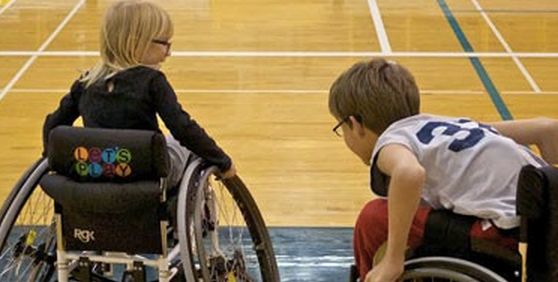


 Recreational Gymnastics
Reply